Prepare & operate
Drivers & dispatchers
Connect safe operation with planning, communication, and responsibility for others.
Find your experience
Safety, science, careers, and confidence. Our programs use a real bus to make transportation something visitors can understand and explore.
What brings you here?
The best fit depends on your visitors and what you want them to take away.
Your starting point
Start with everyday passenger habits: understand the danger zone, learn the boarding routine, and remember S.A.F.E.
Safety at every event
Five Giant Steps/Danger Zone Safety is a standard RTD event activity. Explore waiting zones, visibility, boarding, and S.A.F.E.—then work through everyday “what would you do?” situations.
Signature experiences
Observation & safety
Find it. Inspect it. Explain it. Explore the same equipment a professional driver checks, with questions scaled to the group.
Explore Little Pre-Trip ↗Familiarization & confidence
Preview the steps, seats, and routine with a trusted adult nearby. Looking from outside can be a meaningful first step.
Explore Ready to Ride ↗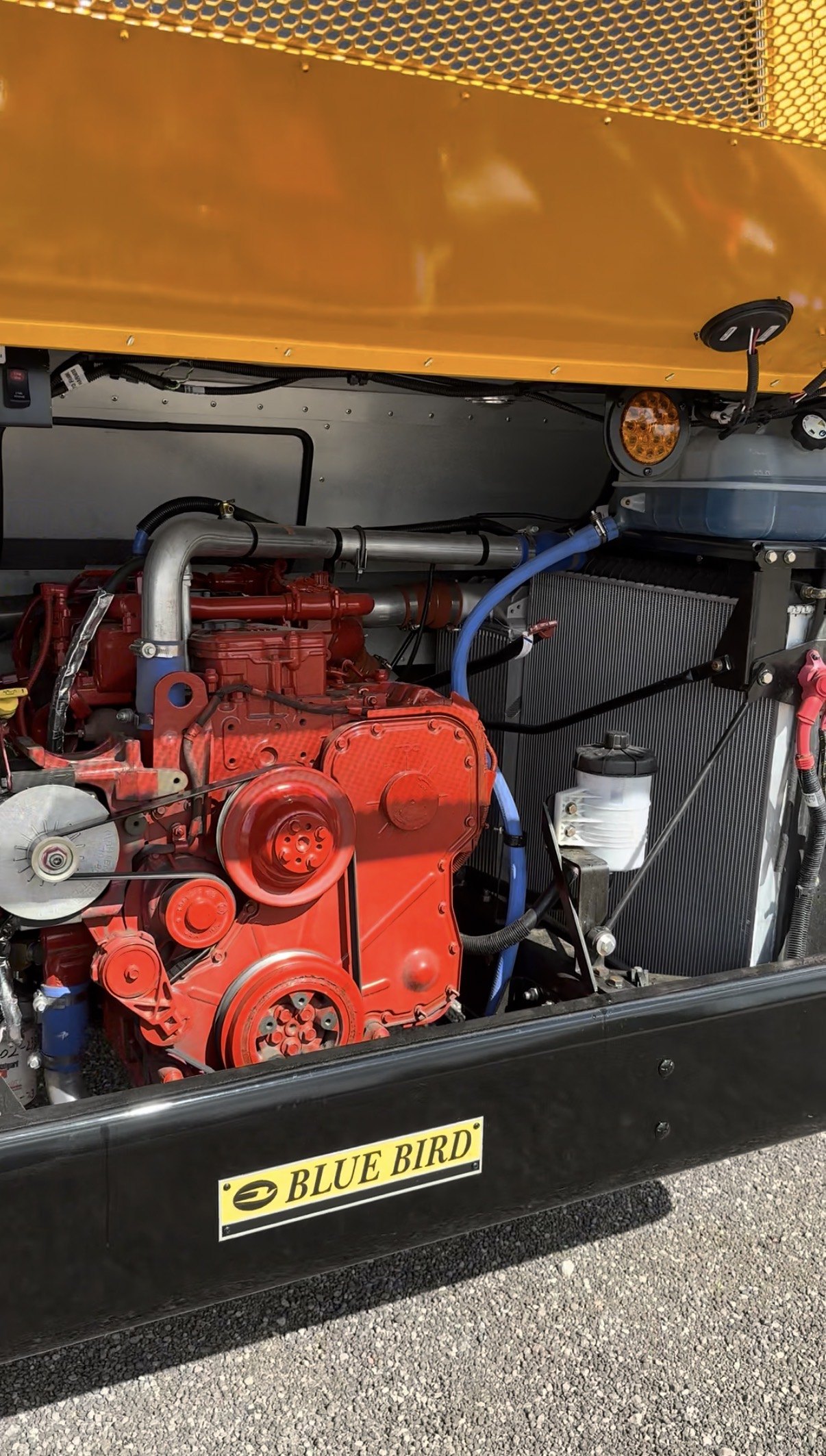
Science & engineering
Trace the relationships between cooling, power, air pressure, electrical systems, and controls. Start with a component you can see, then ask what it does and what depends on it.
A rear-engine layout changes where components sit and how a technician reaches them. Compare the engine bay with the passenger space and ask what the designer needed to make room for.
Follow one connection at a time: where power is produced, what needs cooling, and how controls communicate with the system. We use visible components to frame questions rather than ask visitors to operate machinery.
Design challenge: If you moved an engine, what else might need to move with it? Sketch your idea and name one trade-off.
People & possibilities
A driver is the most visible person in a much larger team. Explore how different skills keep transportation working.
Prepare & operate
Connect safe operation with planning, communication, and responsibility for others.
Inspect & maintain
Turn a symptom into a question, understand the system, and work through a problem.
Design & teach
Explore how things are built—and how someone learns to use them well.
Tell us about the audience, setting, and time available. We can discuss a focused activity or a mix of topics.