Find it.
Locate a real component.
Little Pre-Trip · Hands-on safety
A professional inspection begins with paying attention. Little Pre-Trip turns that habit into an approachable discovery experience.
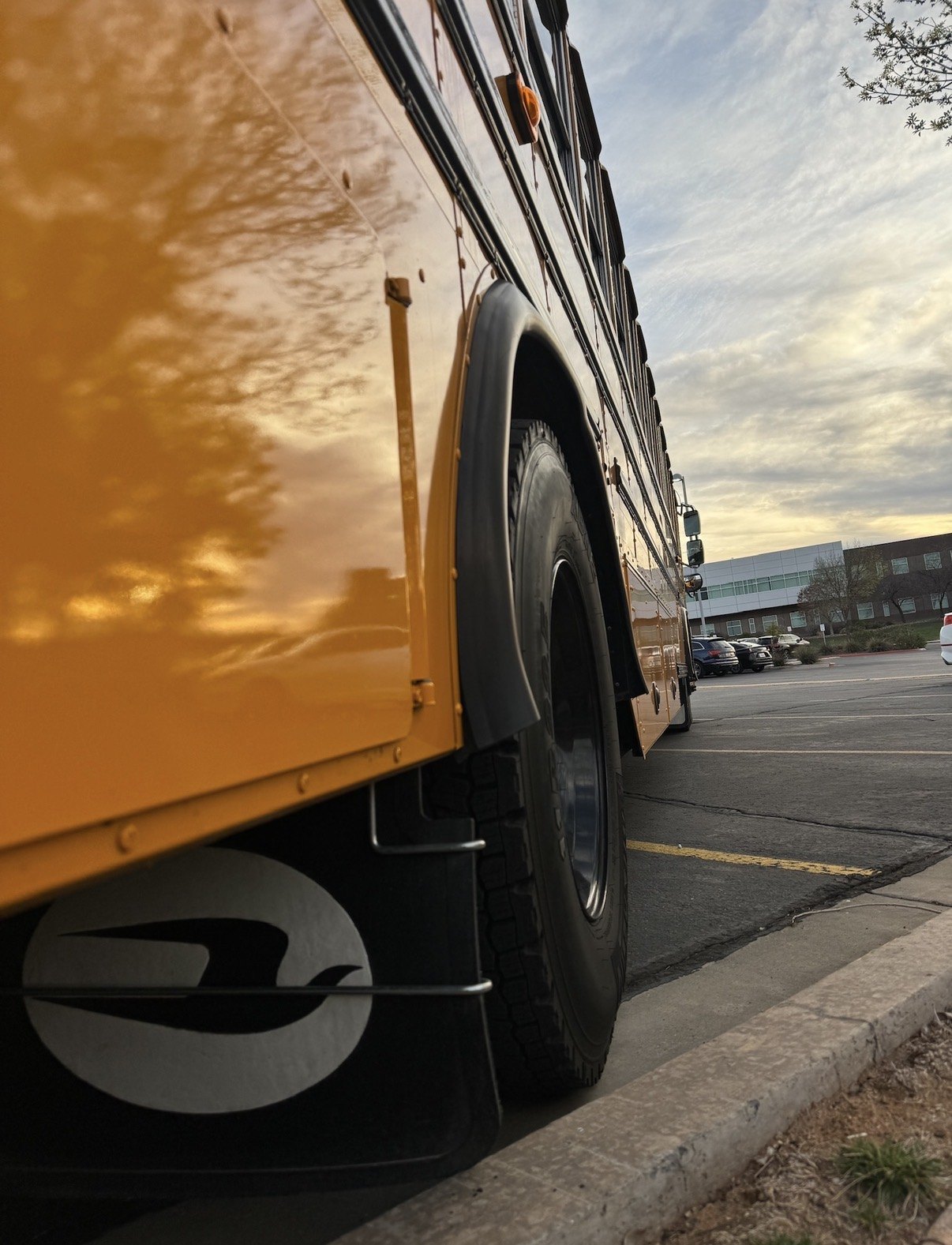
Locate a real component.
Notice its condition.
Connect it to safety.
Share what you learned.
Try it together
Pick a prompt and think it through before opening the explanation. At a visit, an RTD facilitator guides the activity.
Presence and condition are different questions. Look for a secure mount, a clear surface, and visible damage. Then ask what area that mirror is intended to show.
A driver uses several views to gather information. One mirror cannot show everything, and seeing a mirror does not guarantee the driver sees you. Stay in the facilitator’s designated area during the activity.
Explain your thinking: “I noticed ____. That matters because ____.” What would dirt on the glass change?
Tread is one clue. A professional also considers inflation, cuts, bulges, and other damage, along with the condition of the wheel and its hardware.
Use this as an observation exercise: describe what you can see, then identify what you cannot determine just by looking. A tire can look round without that proving its pressure is correct.
Think like an inspector: Which question would require a measurement or a trained person? Let the facilitator explain; visitors do not handle or adjust equipment.
Finding the sign is the beginning. Notice where the exit is, how someone would reach it, and whether anything would block that route. Different exits may have different instructions.
Ask the facilitator to explain the markings and demonstrate only when appropriate. Visitors should not operate emergency handles or practice an evacuation on their own.
Take it further: How could a backpack left in the aisle affect someone trying to reach an exit? On a school trip, listen to the driver’s emergency instructions.
What visitors take away
The goal is a habit: look carefully, ask a useful question, and understand why the answer matters.
Activities can include tires and wheels, lights and reflectors, mirrors, emergency equipment, and visible vehicle systems. We shape the language and depth around the audience and event.
Little Pre-Trip is an educational activity, not a vehicle inspection qualification.
Give visitors a reason to slow down, look closely, and discover the safety thinking behind a familiar vehicle.
Connect the habits
Continue with the habits passengers use: where to wait, when to board, and how to leave the bus safely.
Explore School-Bus Safety